
URBAN ENVIRONMENTAL QUALITY: NOISE AND AIR POLLUTION IN CITIES
Keywords:
Urban environmental quality, noise, air pollution, sustainability, nature-based solutions, urban green structures, urban planing, public healthSynopsis
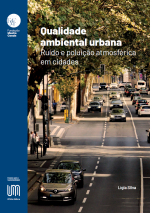
The book “Urban Environmental Quality: Noise and Air Pollution in Cities” offers an in-depth reflection on the interaction between the built environment, noise, and air pollution — key factors determining the quality of life and the sustainability of contemporary cities.
Adopting an interdisciplinary perspective that bridges urban engineering, environmental sciences, and urban planning, the book proposes an integrated reading of these two domains, which are often analysed separately. It demonstrates how their combined understanding enables the definition of more effective management strategies and public policies grounded in scientific knowledge.
Part I presents the conceptual and regulatory framework of both phenomena, addressing their main sources, measurement and modelling methods, and the impacts on human health and the urban environment. It also discusses European directives and Portuguese planning instruments, emphasizing the role of local authorities in implementing action plans and strategic maps for noise and air quality management.
Part II focuses on the practical application of these methodologies through case studies carried out in Viana do Castelo, Braga, and Vila Real. The CityAir and CityNoise-Air models, developed at the University of Minho, are highlighted for integrating noise and air quality indicators into a composite Urban Environmental Quality Index, supporting spatial analysis and sustainable urban planning.
The book also highlights the importance of Nature-Based Solutions (NbS), particularly Urban Green Structures — green corridors, parks, green roofs and façades — for their capacity to filter pollutants, mitigate noise, and reduce the urban heat island effect. Overall, this work stands as a relevant scientific and technical contribution to professionals and researchers engaged in creating more sustainable, resilient, and healthy cities.
Downloads
Download data is not yet available.
References
Aduse-Poku, M., & Edelmann, H. (2025). Quantifying the potential of façade climbing plants in reducing air pollution: a novel investigation into the absorption capabilities of three climbers for CO2, NO2, and O3 in urban environments. Urban Ecosystems, 28(2), e76.
Anderson, V., & Gough, W. (2022). A typology of nature-based solutions for sustainable development: an analysis of form, function, nomenclature, and associated applications. Land, 11(7), e1072.
Arbid, Y., Richard, C., & Sleiman, M. (2021). Towards an experimental approach for measuring the removal of urban air pollutants by green roofs. Building and Environment, 205, e108286.
Barber, J. R., Crooks, K. R., & Fristrup, K. M. (2010). The costs of chronic noise exposure for terrestrial organisms. Trends in Ecology & Evolution, 25(3), 180–189. https://doi.org/10.1016/j.tree.2009.08.002
Baró, F., & Baggethun, E. (2017). Assessing the potential of regulating ecosystem services as nature-based solutions in urban areas. In Kabisch et al. (Eds.), Nature-based solutions to climate change adaptation in urban areas: linkages between science, policy and practice (pp. 15-27). Springer International Publishing.
Basner, M., Clark, C., Hansell, A., Hileman, J. I., Janssen, S., Shepherd, K., & Sparrow, V. (2017). Aviation Noise Impacts: State of the Science. Noise & health, 19(87), 41–50. https://doi.org/10.4103/nah.NAH_104_16
Bernardini, M., Fredianelli, L., Fidecaro, F., Gagliardi, P., Nastasi, M., & Licitra, G. (2019). Noise Assessment of Small Vessels for Action Planning in Canal Cities. Environments, 6(3), e31. https://doi.org/10.3390/environments6030031
Blanco, I., Schettini, E., & Vox, G. (2019). Predictive model of surface temperature difference between green façades and uncovered wall in Mediterranean climatic area. Applied Thermal Engineering, 163, e114406.
C40 Cities (s.d.) Good practice guide: low-emission vehicles. https://www.c40.org/pt/case-studies/c40-good-practice-guides-london-charging-zones-to-promote-ulevs/
Cesaroni, G., Boogaard, H., Jonkers, S., Porta, D., Badaloni, C., Cattani, G., Forastiere, F., & Hoek, G. (2012). Health benefits of traffic-related air pollution reduction in different socioeconomic groups: the effect of low-emission zoning in Rome. Occupational and Environmental Medicine, 69(2), 133–139. https://doi.org/10.1136/oem.2010.063750
Comissão Europeia (2021) Zero pollution targets. https://environment.ec.europa.eu/strategy/zero-pollution-action-plan/zero-pollution-targets_en
Comissão Europeia (2023) Emissions in the automotive sector. https://single-market-economy.ec.europa.eu/sectors/automotive-industry/environmental-protection/emissions-automotive-sector_en
Dai, B., Sheng, N., Zhao, W., Mu, F., & He, Y. (2020). Evaluation of urban inland waterway traffic noise using a modified Nord 2000 prediction model. Environmental Research, 185, e109437.
Elsadek, M., Liu, B., & Lian, Z. (2019). Green façades: Their contribution to stress recovery and well-being in high-density cities. Urban Forestry & Urban Greening, 46, e126446.
Europe's Rail. (2019, September 25). Mission and Objectives. Europe’s Rail. https://rail-research.europa.eu/about-shift2rail/mission-and-objectives/
European Environment Agency [EEA] (2018). Electric vehicles from life cycle and circular economy perspectives - TERM 2018: Transport and Environment Reporting Mechanism (TERM) report, Luxembourg.
European Environment Agency [EEA] (2020). Environmental noise in Europe – 2020.
Fang, C. F., & Ling, D. L. (2003). Investigation of the noise reduction provided by tree belts. Landscape and Urban Planning, 63(4), 187–195.
Feng, X., & Cheng, X. (2021). Cooling effect of urban green spaces: A case study of 20 parks in Beijing. Sustainability, 13(4), e2221.
Fonseca, F., Papageorgiou, G., Conticelli, E., Jabbari, M., Ribeiro, P. J., Tondelli, S., & Ramos, R. (2024). Evaluating attitudes and preferences towards walking in two European cities. Future Transportation, 4(2), 475-490.
Fotiadi, A., Paravantis, J., Souliotis, M., & Mihalakakou, G. (2023). Sustainable urban environment through green roofs: A literature review with case studies. Sustainability, 15(22), e15976.
Grundström, M., & Pleijel, H. (2014). Limited effect of urban tree vegetation on NO2 and O3 concentrations near a traffic route. Environmental Pollution, 189, 73-76.
Guo, H., Liu, Y., & Sun, R. (2024). Spatial configuration of urban green infrastructure and its effects on cooling: A meta-analysis. Environmental Research Letters, 19(1), e015002.
Hanson, C. E., Jason, P. E., Ross, C., & Towers, D. A. (2012). High-Speed Ground Transportation Noise and Vibration Impact Assessment. https://railroads.dot.gov/elibrary/high-speed-ground-transportation-noise-and-vibration-impact-assessment
Hofbauer, F., & Putz, L. M. (2020). External costs in inland waterway transport: An analysis of external cost categories and calculation methods. Sustainability, 12(14), e 5874.
Horoshenkov, K. V., Hothersall, D. C., & Mercy, S. E. (2013). Acoustic performance of a living willow barrier. Applied Acoustics, 74(11), 1236–1245.
Institute for European Environmental Policy [IEEP] (2020). Workshop on mobilizing up-scaling of nature-based solutions for climate change throughout 2020 and beyond, 4-5 February, Brussels.
Infraestruturas de Portugal. (n.d.). Estratégia Rede Ferroviária Nacional (RFN) 2014-2050. https://81-90-53-65.addr.refertelecom.pt/rede/ferroviaria/desenvolvimento-da-rede/estrategia-14-50
Irvine, K. N., Devine-Wright, P., Payne, S. R., Fuller, R. A., Painter, B., & Gaston, K. J. (2009). Green space, soundscape and urban sustainability: An interdisciplinary, empirical study. Local Environment, 14(2), 155–172.
Jayasooriya, V., N, A., Muthukumaran, S., & Perera, B. (2017). Green infrastructure practices for improvement of urban air quality. Urban Forestry & Urban Greening, 21, 34-47.
Jeon, J. Y., Lee, P. J., You, J., & Kang, J. (2010). Perceptual assessment of quality of urban soundscapes with combined noise sources and water sounds. The Journal of the Acoustical Society of America, 127(3), 1357–1366.
Jozay, M., Zarei, H., Khorasaninejad, S., & Miri, T. (2024). Maximising CO2 sequestration in the city: the role of green walls in sustainable urban development. Pollutants, 4(1), 91-116.
Kareiva, P., Tallis, H., Ricketts, T., Daily, G., & Polasky, S. (2013). Natural Capital: Theory and Practice of Mapping Ecosystem Services. Oxford University Press.
Lauwaet, D., Berckmans, J., Hooyberghs, H., Wouters, H., Driesen, G., Lefebre, F., De Ridder, K. (2024). High resolution modelling of the urban heat island of 100 European cities. Urban Climate, 54, e101850.
Martins, M., Hadba, L., Mendonça, P., & Silva, L. T. (2021). Evaluating the potential of vegetation to capture pollutants in urban environment. In Asia Conference on Environment and Sustainable Development (virtual conference), 6-8 November.
McPherson, E., Nowak, D., Heisler, G., Grimmond, S., Souch, C., Grant, R., & Rowntree, R. (1997). Quantifying urban forest structure, function, and value: The Chicago Urban Forest Climate Project. Urban Ccosystems, 1(1), 49-61.
Menon, J., & Sharma, R. (2021). Nature-based solutions for co-mitigation of air pollution and urban heat in Indian cities. Frontiers in Sustainable Cities, 3, e705185.
Molloy, A., Collier, M., & Buckley, Y. (2024). Identification and assessment of best practice in nature-based solutions for climate action and ecosystem restoration in Ireland. Climate Change Advisory Council Working Paper. https://www.climatecouncil.ie/councilpublications/councilworkingpaperseries/Identification%20and%20assessment%20of%20best%20practice%20in%20nature-based%20solutions%20for%20web.pdf
Murphy, E., & King, E. A. (2014). Environmental Noise Pollution: Noise Mapping, Public Health, and Policy, Environ. Noise Pollut. Noise Mapping, Public Heal. Policy, pp. 1–268.
OECD. (1995). Roadside noise abatement. Organisation for Economic Co-operation and Development Publications.
Parlamento Europeu (2021). Fichas técnicas sobre a União Europeia - Poluição atmosférica e poluição sonora.
Pérez, G., Coma, J., Sol, S., & Cabeza, L. (2017). Green facade for energy savings in buildings: The influence of leaf area index and facade orientation on the shadow effect. Applied Energy, 187, 424-437.
Popper, A. N., Hawkins, A. D., & Thomsen, F. (2020). Taking the Animals’ Perspective Regarding Anthropogenic Underwater Sound. Trends in Ecology & Evolution, 35(9), pp. 787–794.
Remme, D., & Haarstad, H. (2022). From instrumentalization to commoning: A critical review of participation in urban nature-based solutions. Frontiers in Sustainable Cities, 4, e917607.
Ribeiro, N. M. P. (2009). Barreiras sonoras em alta velocidade ferroviária. [Dissertação de Mestrado publicada]. Universidade do Porto. https://repositorio-aberto.up.pt/bitstream/10216/60073/1/000136599.pdf
Rupprecht Consult (Ed.) (2019). Guidelines for Developing and Implementing a Sustainable Urban Mobility Plan (2nd Edition). https://urban-mobility-observatory.transport.ec.europa.eu/system/files/2023-09/sump_guidelines_2019_second%20edition.pdf
Shafique, M., Xue, X., Luo, X. (2020). An overview of carbon sequestration of green roofs in urban areas. Urban Forestry & Urban Greening, 47, 126515.
Silva, L. T. (2007) Avaliação da Qualidade Ambiental Urbana [Tese de doutoramento publicada]. Universidade do Minho. https://hdl.handle.net/1822/7515
Silva, L. T. (2009). Gestão Ambiental Urbana [Sebenta da unidade curricular do Mestrado em Gestão Ambiental Urbana, material de apoio às aulas]. Universidade do Minho.
Silva, L. T. (2012). Qualidade do Ambiente Construído [Sebenta da unidade curricular do Mestrado em Engenharia Civil, material de apoio às aulas]. Universidade do Minho.
Silva, L. T. (2015) Environmental quality health index for cities. Habitat International, 45(P1), 29-35. http://doi.org/10.1016/ j.habitatint.2014.06.020
Silva, L. T., & Mendes, J. F. G. (2012). City noise–air: An environmental quality index for cities. Sustainable Cities and Society, 4(1), 1–11.
Silva, L. T., Magalhães, A., Silva, J. F., & Fonseca F. (2021). Impacts of low-frequency noise from industrial sources in residential areas, Applied Acoustics, 182, e108203. https://hdl.handle.net/1822/75413
Silva, L., Fonseca, F., Pires, M., & Mendes, B. (2019). SAUS: A tool for preserving urban green areas from air pollution. Urban Forestry & Urban Greening, 46, 126440.
Silva, L., Lopes, H., Silva, J., Reis, C., & Fonseca, F. (2025). The nexus of nature-based solutions and sustainability in cities: vegetation’s impact on particulate matter capture and traffic noise reduction. In Occupational and Environmental Safety and Health VI: Volume 1: Occupational Risk Assessment, Management and Case Studies (pp. 411-422). Springer Nature Switzerland.
Speak, A., Rothwell, J., Lindley, S., & Smith, C. (2012). Urban particulate pollution reduction by four species of green roof vegetation in a UK city. Atmospheric Environment, 61, 283-293.
Urrestarazu, L., Blasco-Romero, A., & Fernández-Cañero, R. (2017). Media and social impact valuation of a living wall: The case study of the Sagrado Corazon hospital in Seville (Spain). Urban Forestry & Urban Greening, 24, 141-148.
van Breemen, T.,Blikman, A., van Vulpen, N., & Smit, R. (2008). Good Practice Guide on Port Area Noise Mapping and Management, Amsterdam.
Van Renterghem, T., & Botteldooren, D. (2009). Reducing the acoustical façade load from road traffic with green roofs. Building and Environment, 44(5), 1081–1087.
Vitaliano, S., Cascone, S., & D’Urso, P. (2024). Mitigating built environment air pollution by green systems: An in-depth review. Applied Sciences, 14(15), 6487.
Vos, P. de (2016). Railway noise in Europe - State of the art report.
Wang, A., Wang, J., Zhang, R., & Cao, S. (2024). Mitigating urban heat and air pollution considering green and transportation infrastructure. Transportation Research Part A, 84, 104079.
World Health Organization [WHO] (2018). Environmental Noise Guidelines for the European Region. WHO Regional Office for Europe.
Wróblewska, K., & Jeong, B. (2021). Effectiveness of plants and green infrastructure utilization in ambient particulate matter removal. Environmental Sciences Europe, 33(1), 110.
Zhou, S., Yu, Z., Ma, W., Yao, X., Xiong, J., Ma, W., Xiang, S., Yuan, Q., Hao, Y., Xu, D., Wang, B., Zhao, B. (2025). Vertical canopy structure dominates cooling and thermal comfort of urban pocket parks during hot summer days. Landscape and Urban Planning, 254, e105242.
Câmara Municipal de Braga (2017). Plano de Implementação do Braga Urban Innovation Laboratory Demonstrator (BUILD), Braga, Portugal.
Mendes, B., & Silva, L. T. (2016). Integração de um Sistema de Monitorização Ambiental Urbano numa Smart City, in EuroRegio 2016.
Mendes, J. F. G., Ribeiro, P., & Silva, L. T. (2010). Sistema de informação e monitorização do ar e ruído - SmarBraga, in Projecto Mobilidade Sustentável [Volume II - Manual de Boas práticas para uma mobilidade sustentável, pp. 235–240]. Agência Portuguesa do Ambiente.
Ribeiro, R., Araújo, E., & Silva, M. (2020). Relatório WP2 – Braga Urban Innovation Laboratory demonstrator: SchoolBus (Documento interno do projeto BUILD). Universidade do Minho. Trabalho realizado para a Câmara Municipal de Braga.
Silva, L. T. (2007). Avaliação da Qualidade Ambiental Urbana [Tese de doutoramento publicada]. Universidade do Minho. https://hdl.handle.net/1822/7515
Silva, L. T., & Mendes, J. F. G. (2012). City Noise-Air: an environmental quality index for cities. Sustainable Cities and Society, 4(1), 1-11. http://doi.org/ 10.1016/j.scs.2012.03.001.
Silva, L. T., & Paiva, F. (2018). Relatório WP2 – Braga Urban Innovation Laboratory demonstrator: Diagnóstico dos pressupostos estabelecidos na situação de referência (Documento interno do projeto BUILD). Universidade do Minho. Trabalho realizado para a Câmara Municipal de Braga.
Silva, L. T., & Paiva, F. (2019). Assessoria técnica no âmbito da avaliação dos impactos decorrentes das ações implementadas na área de intervenção - Relatório WP2 - Braga Urban Innovation Laboratory Demonstrator, Braga, Portugal.
Silva, S., & Almeida, M. (2019). Relatório WP2 – Braga Urban Innovation Laboratory demonstrator: Avaliação do Desempenho Termo-energético da Escola Básica do 1º Ciclo com Jardim de Infância de Enguardas (Documento interno do projeto BUILD). Universidade do Minho. Trabalho realizado para a Câmara Municipal de Braga.
Torres, M., Silva, L. T., Mendes, J. F. G., Santos L. (2013). Health and well-being in urban areas: policy to practice. Revista de Saúde Pública, 31(1), 95-107. http//doi:10.1016/j.rpsp.2013.04.001
Viana, I., & Teixeira, C. (2020). Relatório WP4 – Braga Urban Innovation Laboratory demonstrator: Conexão + Cidadania (Documento interno do projeto BUILD). Universidade do Minho. Trabalho realizado para a Câmara Municipal de Braga.
Downloads
Published
May 12, 2026
Series
Categories
Copyright (c) 2026 Ligia Silva