Science Sights
Keywords:
Scientific-didactic itineraries; Biology; Physical; Geology; Mathematics; Chemistry.Synopsis
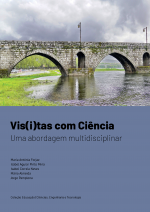
Science Sights aims to make it possible for a certain (scientific) gaze to hover and land in natural spaces, transfiguring and revealing them as a source of multidisciplinary knowledge and learning. In this sense, city itineraries (Braga), mountain routes (Sameiro, Arga and da Estrela) and along the coastline (Litoral de Esposende and Amorosa) are proposed, so that Nature reveals itself to the different Sciences, in angles, sometimes (almost) geometrically equal, sometimes complementary.
Not being initially aware that we were treading “humboldtian” terrain, in fact we were only following, at our scale, the path opened by Alexander Von Humboldt (1769-1859), German scientist, polymath, naturalist and environmentalist. In his enormous appreciation for the paradox of Nature's diversity and uniqueness, either because of the affinity with the volcanoes he knew, or because of the similarities and differences of fauna and flora, throughout his very long journey he undertook, treading Humboldt's paths is persisting in facing Nature as a result of an interrelationship of phenomena, all painted, as he said, with a “wide brush”, incessantly seeking the true “painting of nature”, his Naturgemäld.
It is common sense that some of the Sciences, due to their more naturalistic character, have an appetite, one would say visceral, to take the field as their laboratory. But, for sure, the emanation of scientific knowledge sprouts from the magma of natural phenomena, which are the sum and substance of them all. In fact, all physics-chemistry-mathematics-geologies-biologies are in the breeze-sea-river-mountain-plant-street-church-glacier.
It all starts with the ability to get amazed by the observation and, little by little, we learn how to open doors to the stone and to the drop of water and to the flower, asking them to let us in into their intimacy. Afterwards, aware of some of these intimacies, as if the world is going through a metamorphosis.
It is our wish that the testimony we put forward in these pages can be evidence that it is possible to design multidisciplinary field trips, to build a repository of topics to be addressed in these outdoor activities and to demonstrate that we can see as long as we know how to observe!
The itineraries proposed for these field trips were selected due to the easy access to each of the points of interest, providing privileged spaces for observation and integration of multidisciplinary knowledge. These are not closed routes, as the visitor finds multiple opportunities to pursue his curiosity.
The chapters referring to the coastline of Esposende and Amorosa, Serra de Arga and Serra da Estrela, as they were part of a Field Guide written within the scope of the “Projecto Sentidos da Ciência” of the School of Sciences, University of Minho, were revised and expanded.
In this book routes are suggested, with stops and respective geographic coordinates (obtained by GPS, in WGS84), and for each one of them several activities and observations are proposed. Each chapter starts with a summary of the topics to be addressed in the visit, followed by a detailed presentation of the itinerary, in which the topics presented are further explored, using, for example, some theoretical notes that allow explaining the phenomena under observation, and even, sometimes, some suggestions for simple experiments that can be carried out in the field.
To complete and for better interpretation of the information provided, a list of recommended bibliography is included, as well as a glossary that will allow the understanding of language and scientific and technical terms used throughout this fieldguide, and also a Geological Time Scale.
As an Appendix, there is a list of support materials to assist the guides of field trips (teachers, tour guides, among others), whose scientific-pedagogical approach is intended to be unitary and multiple!
Downloads
Download data is not yet available.
References
Barómetro Informa DB (2019). Vários Indicadores. Barómetro Informa DB, Lisboa.
Ebbinghaus, H. (1885). Memory: A contribution to experimental psychology. New York: Dover.
Feiock, Richard (2013). The Institutional Collective Action Framework. The Policy Studies Journal, Vol. 41, No. 3, 2013. 397-425.
Ferrão, J. (2005), “Dinâmicas demográficas: uma visão panorâmica”, in Geografia de Portugal: sociedade, paisagens e cidades, vol. 2, Rio de Mouro, Círculo de Leitores e Autores,
Joormann, J. e P. Hertel (2005). Remembering the Good, Forgetting the Bad: Intentional Forgetting of Emotional Material in Depression. Journal of Abnormal Psychology. 2005, Vol. 114, No. 4, 640 – 648
Kelley, Matthew & Nairne, James. (2001). Von Restorff Revisited: Isolation, Generation, and Memory for Order. Journal of experimental psychology. Learning, memory, and cognition. 27. 54-66. 10.1037//0278-7393.27.1.54.
LeMoult, J., Hertel, P. T., & Joormann, J. (2010). Training the forgetting of negative material: The role of active suppression and therelation to stress reactivity. Applied Cognitive Psychology, 24, 365-375.
Macedo, A. (2016). Para uma discussão dos determinantes da criminalidade em Portugal. Dissertação do Mestrado em Economia. Universidade do Minho, Braga.
Maia Trigueiro, F. (2916). DIREITO AO ESQUECIMENTO NA SOCIEDADE DA INFORMAÇÃO. Dissertação em Ciências Jurídico-Políticas – Menção em Direito Constitucional. Universidade de Coimbra.
Metcalfe, J. Stanley (2006). Evolutionary Economics and Creative Destruction. Routledge, Nova Iorque.
Mourao, P. (2017): “Port wine, Brazil, and the world economy: A time series analysis from 1756 to Brazilian independence”; Revista de Historia Económica - Journal of Iberian and Latin American Economic History; Volume 35, Issue 2 September 2017 , pp. 275-300
Mourao, P. e A. Popescu (2016), “Does Regional Openness stimulate vocational training in Romania?”; Transformation in Business and Economics; 15 (3), 220-238
Mourao, P. e E. Simone (2016). “Rhetoric on the economy: have European parties changed their economic messages?”; Applied Economics; 48 (22); 2022-2036
Mourao, P. e V. Martinho (2016). "Discussing structural breaks in the Portuguese regulation on forest fires — An economic approach"; Land Use Policy; 54 (2016); 460-478
PNCT, Programa Nacional de Coesão Territorial (2018). Diagnóstico. Lisboa.
PORDATA (2019). Vários indicadores. PORDATA, Lisboa.
Povinelli, Elizabeth. (2011). Economies of Abandonment. Duke University, Durham
Rebelo Pereira, Pedro (2014), “Viver no interior do país é aborrecido”. Público, 15/12/2014
Reeves, P. (2007). “‘Places that can be Easily Defended’: A Case Study in the Economics of Abandonment During Utah’s Black Hawk War,”Utah Historical Quarterly75 (Summer 2007): 220-237
Safina, C. (2015). Beyond Words What Animals Think and Feel. Henry Holt & Company, New York.
Sampaio, Sofia (2013): “Portuguese Cultural Studies / Cultural Studies in Portugal”, Culture Unbound, Volume 5, 2013: 73–88.
Silva, Agostinho (2001). Ensaios Sobre Cultura e Literatura Portuguesa e Brasileira II. Edição: Âncora Editora, Lisboa.
Silveira Pereira, Hugo. (2010). Caminhos-de-ferro em Trás-os-Montes no século XIX: das expectativas ao esquecimento. Revista de Letras. 9. 285-304.
Smith, P. B., & Bond, M. H. (1998) Social Psychology across Cultures. London: Prentice Hall Europe
Thompson, C. Psychoanalysis: Evolution and Development. Londres. Allen and Unwin, New York, 1952
Thorne, B., Henley, T. (2005). Hermann Ebbinghaus in Connections in the History and Systems of Psychology (3rd Edition ed., pp. 211-216). Belmont, CA: Wadsworth Cengage Learning.
Turnbull, N. (2007). Problematology and Contingency in the Social Sciences. Revue internationale de philosophie, 242(4), 451-472. https://www.cairn.info/revue-internationale-de-philosophie-2007-4-page-451.htm.
Weil, S. (1950). Attente de Dieu. Paris: La Colombe.
Williamson, Oliver (1985). The Economic Institution of Capitalism: Firms, Markets, Relational Contracting. New York: The Free Press
Wozniak, R. H. (1999). Classics in Psychology, 1855-1914: Historical Essays W. Bristol: Thoemmes Press.
Wutt, P. (1957). Incertitude et risqué. La Baconniére, Neuchatel
Zimmer, Hubert & Engelkamp, Johannes (1999). Memory psychology: An empirical or an analytical science?. Scandinavian Journal of Psychology. 40. 10.1111/j.1467-9450.1999.tb01461.x.
Jornais consultados (varias edições assinaladas):
A Voz de Trás-os-Montes
Jornal de Noticias
Jornal Económico
Mensageiro de Bragança
National Geographic
Público
The Economist
Bases de Dados Estatísticas Consultadas:
INE (2019)
PORDATA (2019)
Os poemas apresentados como introitos aos Capítulos foram retirados da obra “Rosa do Mundo”, editada pela Assírio e Alvim, 2001, e organizados pela direção editorial de Manuel Hermínio Monteiro.
Downloads
Published
December 16, 2025
Series
Categories
Copyright (c) 2025 Maria Antónia Forjaz, Isabel Maria Cravo Aguiar Pinto Mina, Isabel Correia Neves, Mário Almeida, Jorge Pamplona